
Shopify Customer Retention Strategy: 6 Ways to Increase Repeat Purchases
- 10 min read
- By SU Team
Most Shopify stores do not have a traffic problem — they have a second-purchase problem.
Paid ads, social media, and SEO can bring new customers to your store, but if most first-time buyers never come back, every sale becomes a one-time transaction. Your customer acquisition cost keeps rising, your margins get tighter, and growth becomes harder to sustain.
The Shopify merchants that grow profitably are the ones that treat retention as a real business system — not an afterthought. They track the right metrics, segment their customers, reward repeat purchases, and create campaigns that bring shoppers back at the right time.
In this guide, you’ll learn what customer retention means for Shopify stores, how to measure it, and six practical strategies to build a retention engine that increases repeat purchases, customer lifetime value, and long-term revenue — including loyalty programs, membership tiers, behavior-based targeting, personalized campaigns, and more.


What is Customer Retention?
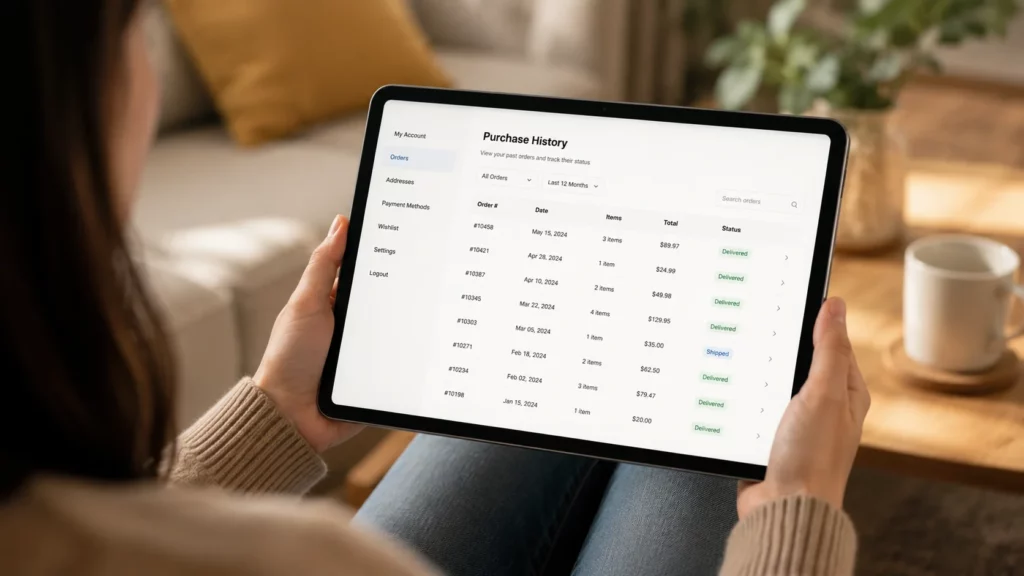
Customer retention refers to your store’s ability to keep existing customers coming back to make repeat purchases over time. A customer who buys once and never returns is not retained. A customer who buys three, five, or ten times is.
Retention is measured as a percentage — your Customer Retention Rate (CRR) — and it tells you how many of your customers from a given period are still buying from you in a later period.
It’s the opposite of churn: if your retention rate is 30%, your churn rate is 70% — meaning 7 out of every 10 customers who bought from you never came back.
Important distinction: Retention is not the same as loyalty. A customer can be retained (they keep buying) without being loyal (they only buy because you're convenient or cheap). True retention strategy builds genuine loyalty — customers who choose you over competitors even when alternatives exist.
Why Your Shopify Customer Retention Strategy Matters
Most Shopify merchants pour their budget into acquisition — ads, influencers, SEO. And while acquiring new customers is essential, it’s only half the equation. The data makes a compelling case for shifting attention to retention.
The economics are clear: retained customers spend more, convert more easily, cost less to engage, and are more likely to refer others. And unlike paid acquisition — where costs increase 15–20% annually — retention channel costs (email, loyalty programs, SMS) remain relatively stable.
The compounding effect: Retention doesn't just save you money today — it compounds. A customer retained for 2 years generates significantly more lifetime value than two separate one-time buyers. Every improvement in retention amplifies the return on every dollar you spend acquiring new customers.
How to Measure Your Customer Retention Rate
Before building a retention strategy, you need to know your starting point. Here’s the formula:
CRR = ( Customers at End of Period − New Customers Acquired ) ÷ Customers at Start of Period × 100
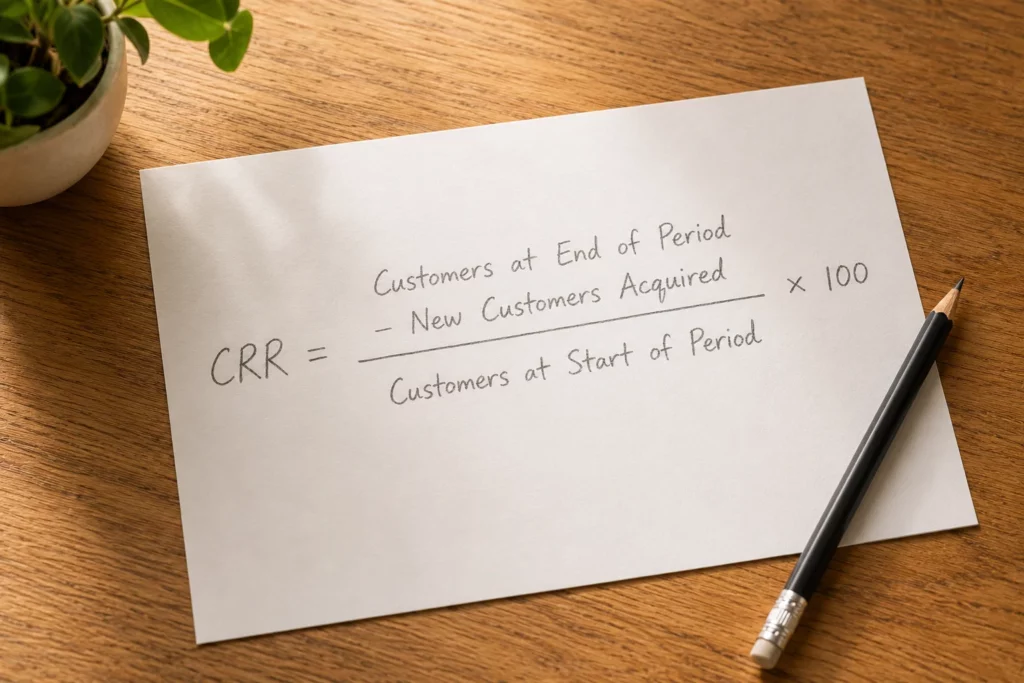
You started January with 500 customers. By end of March, you had 600 customers, of which 150 were new.
CRR = (600 − 150) ÷ 500 × 100 = 90%
In Shopify, you can find the data you need under Analytics → Reports → Customers over time and Returning customer rate.
Once you understand how many customers are coming back, the next step is to connect the tools that influence repeat purchases. Retention strategy works best when your loyalty program, customer segments, promotions, and campaigns work together instead of operating separately. SU Sales helps Shopify stores manage loyalty points, VIP tiers, behavior-based targeting, and personalized campaigns in one app, so merchants can build a more connected retention system.
What is a Good Retention Rate for Shopify?
A good customer retention rate for ecommerce sits around 28–30% on average — but what’s “good” depends heavily on your industry. Consumable products naturally retain more customers than big-ticket durables, simply because people replenish faster. The more important question is: are you improving over time?
Pro Tip: Don't just track your overall retention rate — also track your repeat purchase rate (what % of customers make a second purchase) and Customer Lifetime Value (CLV). These metrics together give you a complete picture of how well your retention strategy is working.
6 Strategies to Build a Customer Retention Strategy for Shopify
Build a Loyalty Points Program
A loyalty points program is the cornerstone of any retention strategy. It gives customers a tangible reason to return — not just because they like your products, but because they're working towards a reward.
The mechanics are simple: customers earn points on every purchase, and can redeem those points for discounts, free products, or other perks. But the psychology is powerful — once a customer has accumulated points, they feel invested in your store and are far more likely to return to use them.
Key elements of an effective loyalty program:
- Clear earn rate: Make it easy to understand — "Earn 1 point for every $1 spent"
- Meaningful redemption value: Points should feel worth accumulating — too small and customers lose interest
- Points expiry: A well-timed expiry reminder motivates customers to return before they lose their points
- Bonus points events: Double or triple points on specific days or products to drive behaviour
Key Insight: The goal isn't just to reward purchases — it's to create a habit. Every time a customer earns points, they form a stronger association between buying from you and feeling rewarded. Over time, this becomes automatic.
Create Membership Tiers (VIP Levels)
Tiered membership programs take loyalty to the next level by creating a sense of status and progression. Instead of every customer being equal, you reward your best customers with exclusive benefits — and create aspiration for everyone else.
A typical tier structure might look like:
- Bronze (entry level): Basic points earning, birthday reward
- Silver ($500+ spend): 1.5x points, early access to sales
- Gold ($1,000+ spend): 2x points, free shipping, exclusive discounts
- Platinum ($2,000+ spend): 3x points, personal shopper, first access to new products
Tiers work because of two powerful psychological principles: the status effect (people want to feel valued and recognized) and the loss aversion effect (once a customer reaches Gold, they'll spend more to avoid dropping back to Silver).
Research shows that customers in the top tier of a loyalty program spend significantly more than non-members. The tier itself becomes a retention mechanism.
Use Behavior-Based Targeting to Re-engage Customers
Not all customers are the same — and your retention strategy shouldn't treat them that way. Behaviour-based targeting means automatically segmenting customers based on what they've done (or haven't done) in your store, and sending them the right message at the right time.
Common customer segments to target:
- Viewed but didn't buy: Send a targeted discount or reminder within 24–48 hours
- Abandoned cart: Follow up with a personalized email or SMS — over 40% of cart abandonment emails are opened
- Purchased once, gone quiet: Win-back campaigns at 30, 60, and 90 days after first purchase
- High-value customers: VIP treatment, early access, exclusive offers
- At-risk customers: Customers whose purchase frequency is declining — intervene before they churn
The 90-day rule: Research suggests that if a customer doesn't make a second purchase within 90 days of their first, the probability of them returning drops significantly. Set up an automated win-back campaign that triggers at the 30, 60, and 90-day marks for first-time buyers.
Send Personalized Email and SMS Campaigns
Email and SMS remain the highest-ROI channels for customer retention — but only when they're relevant. Generic newsletters sent to your entire list are increasingly ignored. Ppersonalized messages sent to the right segment at the right moment drive action.
High-performing retention email and SMS flows include:
- Post-purchase sequence: Thank you → product tips → review request → complementary product recommendation
- Points balance reminder: "You have 450 points — that's $4.50 off your next order"
- Tier upgrade notification: "You're $50 away from Gold status"
- Win-back campaign: "We miss you — here's 15% off to come back"
- Birthday reward: personalized offer on the customer's birthday
- Restock or replenishment reminder: For consumable products, remind customers when they're likely running low
SMS deserves special attention: open rates for SMS are consistently above 90%, compared to 20–30% for email. For time-sensitive offers or win-back messages, SMS often outperforms email significantly.
Offer Targeted Promotions to Specific Customer Segments
Blanket discounts sent to everyone train customers to wait for sales and erode your margins. Targeted promotions sent to specific segments are far more effective — and far less damaging to your brand.
Effective targeted promotion strategies:
- Segment-specific discounts: Offer 20% off to customers who haven't purchased in 60 days, rather than announcing a storewide sale
- Free gift for high-value customers: Reward your top spenders with a surprise gift — the unexpectedness makes it more memorable
- Exclusive member-only promotions: Make loyalty members feel genuinely special with offers that aren't available to the general public
- Spend-to-unlock promotions: "Spend $150 this month and unlock a free gift" — combines AOV increase with retention
Avoid discount dependency: If every retention campaign is a discount, customers will start to expect it. Mix in non-discount rewards — free gifts, exclusive access, personalized experiences — to build genuine loyalty rather than price-based repeat buying.
Build a Referral Program to Retain and Grow Simultaneously
Referral programs are typically thought of as acquisition tools — but they're also powerful retention tools. When a customer refers a friend, they become emotionally invested in your brand. They've put their reputation on the line by recommending you, which creates a deeper sense of loyalty.
A well-designed referral program:
- Rewards the referrer for every successful referral — keeping them engaged and motivated to refer more
- Gives the new customer an incentive to make their first purchase — reducing acquisition cost
- Creates a community effect — referred customers have higher lifetime value than customers acquired through ads
The dual-reward model — where both the referrer and the referred customer receive a benefit — consistently outperforms one-sided referral programs. The referrer feels more generous sharing a code that also benefits their friend, which increases referral rates.
Where to Start: A Practical Action Plan
Building a retention strategy doesn’t have to happen all at once. Here’s a prioritized action plan:
| Strategy | Impact | Time to Results | Start With |
|---|---|---|---|
| Loyalty Points Program | High | 1–3 months | Set up earn rate + redemption value |
| Post-purchase Email Sequence | High | 2–4 weeks | Thank you → review request → upsell |
| Win-back Campaign | High | 2–4 weeks | 30/60/90-day triggers for lapsed buyers |
| Membership Tiers | High | 2–3 months | Define 3 tiers with clear spend thresholds |
| Behaviour-based Targeting | High | 2–4 weeks | Set up abandoned cart + viewed segments |
| Referral Program | Medium | 1–2 months | Launch dual-reward referral with clear incentive |
Our recommendation: Start with a post-purchase email sequence and a loyalty points program. Both can be set up quickly and will immediately start working on your most important retention window — the period right after a customer’s first purchase.
The retention compounding effect: Quick-win strategies like email sequences and targeted campaigns can show measurable results within 2–4 weeks. Loyalty programs and membership tiers typically take 1–3 months. A full retention strategy compounding across all channels can take 3–6 months to significantly impact your Customer Lifetime Value — but the results accelerate over time.
Turn first-time Shopify customers into repeat buyers.
Build a connected retention system with loyalty points, VIP tiers, customer segments, targeted promotions, and personalized campaigns — all in one Shopify app. No app bloat. No switching between multiple tools.